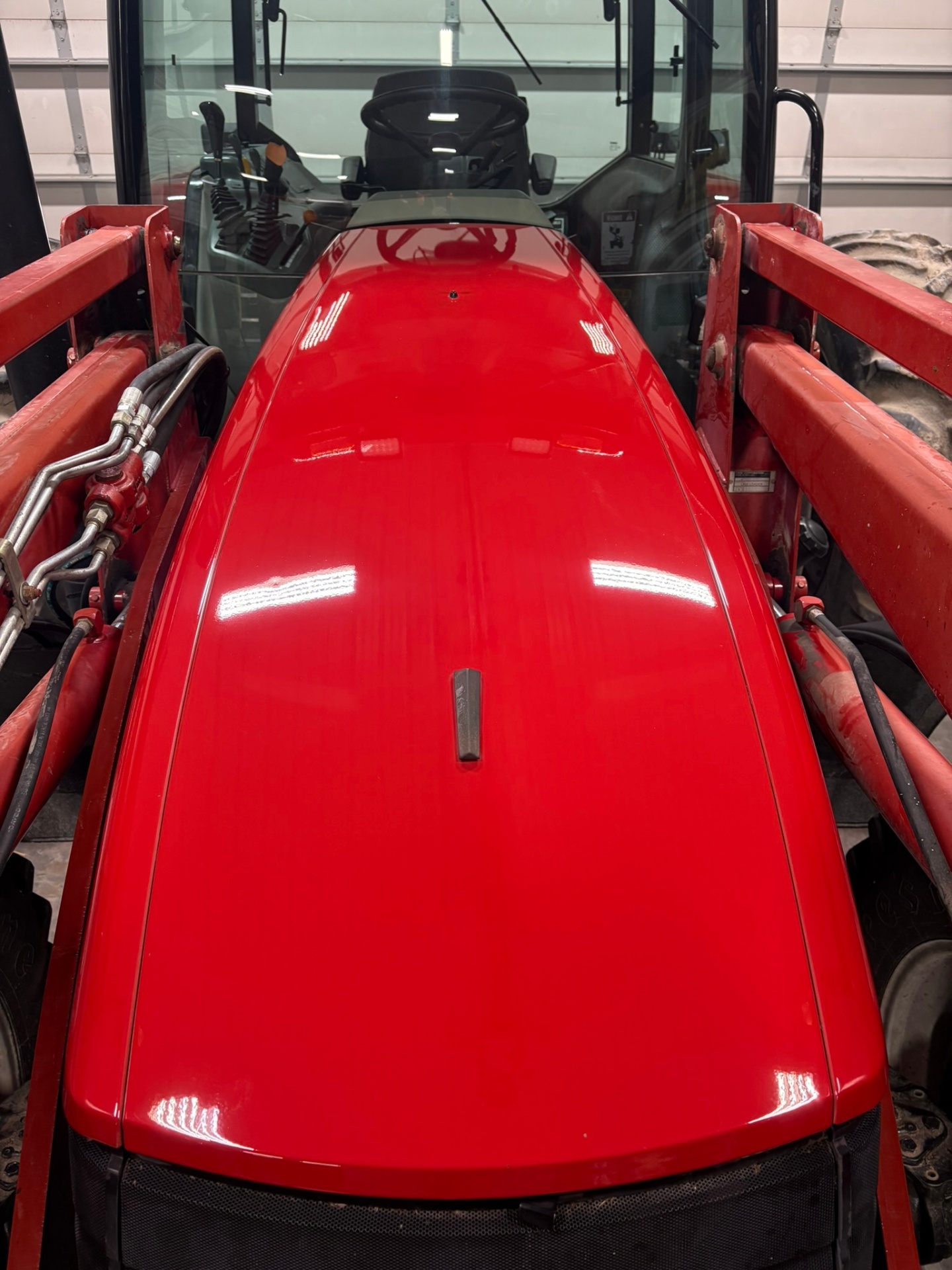
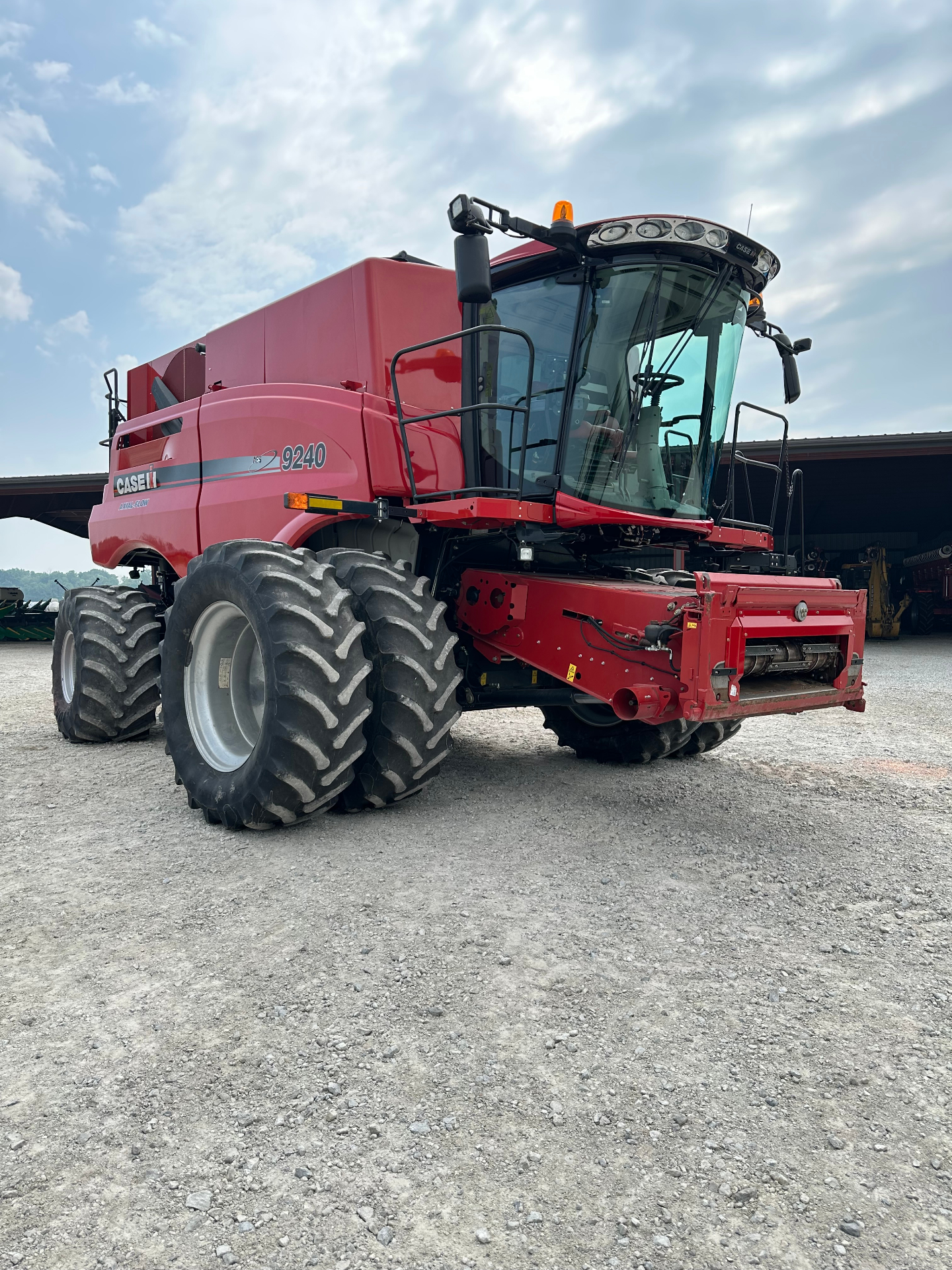
The Question Every Tractor Owner Eventually Asks
At some point, every equipment owner realizes paint protection isn't optional. The question is which direction to go: a familiar bottle of wax, or a modern ceramic coating. Both promise shine, protection, and easier washing. But the moment you look past the marketing, they're completely different products engineered for completely different levels of protection. Wax is a maintenance product. A ceramic coating is a long-term protective system. Understanding the gap between those two categories is the difference between protecting your investment and chasing it.
Why Tractor Paint Needs Protection In The First Place
Tractors in northern Missouri — from Gallatin to Chillicothe, Trenton, Bethany, and Cameron — live in some of the harshest paint conditions in the country. UV exposure breaks down pigments and resins. Humidity accelerates oxidation. Rain leaves mineral spotting. Dust scours the clear coat. Fertilizer residue and chemical contamination eat into unprotected paint. Add long stretches of outdoor storage and the paint never gets a break. Without a protective barrier, every one of these factors hits the clear coat directly — every day, year after year.
What Happens When Paint Is Left Unprotected
Unprotected paint doesn't fail all at once — it fails in stages, and each stage makes the next one worse. First the gloss dulls. Then the surface develops a chalky, oxidized film. Reds turn pink, greens go gray, oranges shift toward washed-out tan. Decals crack, peel, and lose their color. Once oxidation sets in, the clear coat starts breaking down and the underlying pigment is exposed to even more UV. What started as a tractor that needed a wash becomes a tractor that needs full paint correction — or worse, a repaint. The deterioration compounds, and so does the restoration cost.
What Is Wax?
Wax is a sacrificial coating — typically carnauba, synthetic polymer, or a blended sealant — that sits on top of the clear coat. It adds depth and gloss, creates short-term water beading, and gives the paint a smoother feel. Wax has been the standard for decades because it's cheap, easy to apply, and produces an immediate visual improvement. For a garage-kept show car that gets washed every weekend, it works. The problem is that nothing about that use case describes a working tractor.
The Limitations Of Wax On Agricultural Equipment
Wax wears off — fast. Heat from a Missouri summer softens it. Rain and washing strip it. UV breaks it down. On a tractor that's outside year-round, traditional wax often lasts only a few weeks before protection meaningfully drops. Detail sprays and spray waxes are even shorter-lived. To stay protected, equipment owners are forced into a constant reapplication cycle — and most never keep up. Once wax wears thin, the clear coat is back to facing UV, oxidation, and chemical contamination with nothing in the way.
What Is A Ceramic Coating?
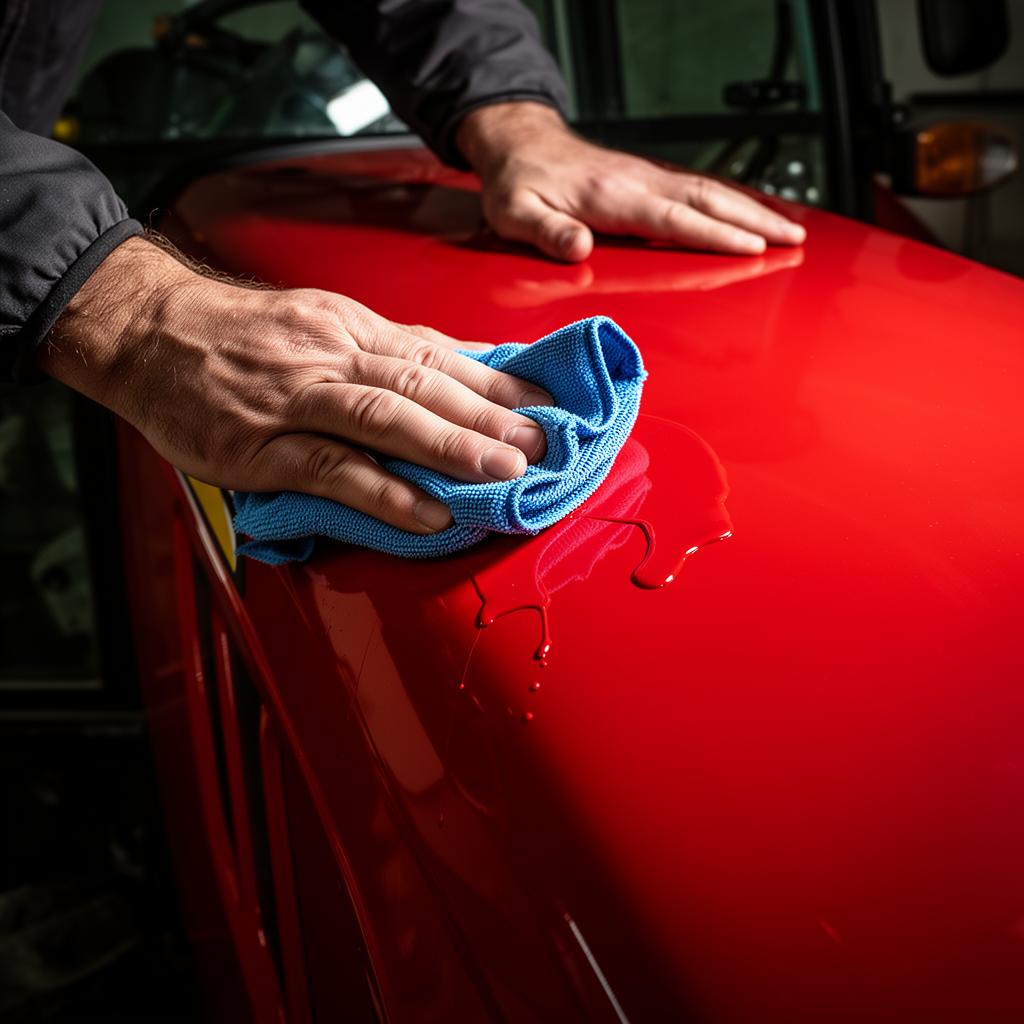
A ceramic coating is a liquid polymer that chemically bonds to the clear coat, forming a hard, semi-permanent protective layer. Unlike wax, it doesn't sit on top of the paint — it becomes part of the surface. Once cured, the coating is extremely resistant to UV, oxidation, chemicals, and contamination. It produces strong hydrophobic behavior, meaning water, mud, and dust release far more easily during washing. Properly installed and maintained, a quality ceramic coating lasts for years instead of weeks.
How Ceramic Coatings Protect Tractor Paint
Ceramic coatings shield paint in ways wax simply cannot. They block a meaningful portion of UV radiation, dramatically slowing the fading and oxidation process. They resist agricultural chemicals — herbicides, fertilizers, fuel splash — that would otherwise etch unprotected paint. They reduce static, so dust doesn't cling as aggressively. And they make cleaning faster: contamination releases instead of grinding into the clear coat. For working equipment, that combination is exactly what's needed.
Wax vs Ceramic Coating — Side-By-Side
Protection Duration: Wax lasts weeks to a few months. A quality ceramic coating lasts years. UV Resistance: Wax offers minimal UV protection. Ceramic coatings provide strong, sustained UV defense. Oxidation Protection: Wax slows oxidation briefly. Ceramic coatings dramatically reduce it. Chemical Resistance: Wax is easily stripped by fertilizers, fuel, and harsh chemicals. Ceramic coatings resist them. Water Behavior: Both bead initially. Wax loses it quickly; ceramic coatings stay hydrophobic for years. Ease Of Cleaning: Coated surfaces wash dramatically faster. Maintenance Requirements: Wax needs reapplication every few weeks. Coatings need only periodic maintenance. Durability: Wax wears away. Ceramic coatings remain bonded. Appearance Retention: Wax fades with the paint. Coatings preserve gloss for years. Long-Term Value: Coatings cost more upfront, less over time.
Which Product Handles Missouri Weather Better?
Northern Missouri delivers everything paint hates: high summer heat, heavy humidity, frequent rain, dust off gravel roads, and constant outdoor exposure. Wax can't keep up — heat softens it, humidity accelerates breakdown, and field dust scrubs it away. Ceramic coatings were engineered for exactly these conditions. They stay bonded through summer heat and winter cold, repel the moisture that drives oxidation, and shrug off the agricultural chemicals that destroy unprotected paint. For tractors based in Gallatin, Chillicothe, Trenton, Bethany, or Cameron, the climate alone makes a strong case for coatings.
Wax On A Working Tractor
On a working tractor, wax faces challenges it was never designed for. Frequent pressure washing strips it. Field dust acts like fine sandpaper. Long days in the sun bake it. Outdoor storage means it never gets a break. Most owners who try to wax-protect a working tractor end up either constantly reapplying or quietly giving up. Either way, the paint loses.
Ceramic Coatings On A Working Tractor
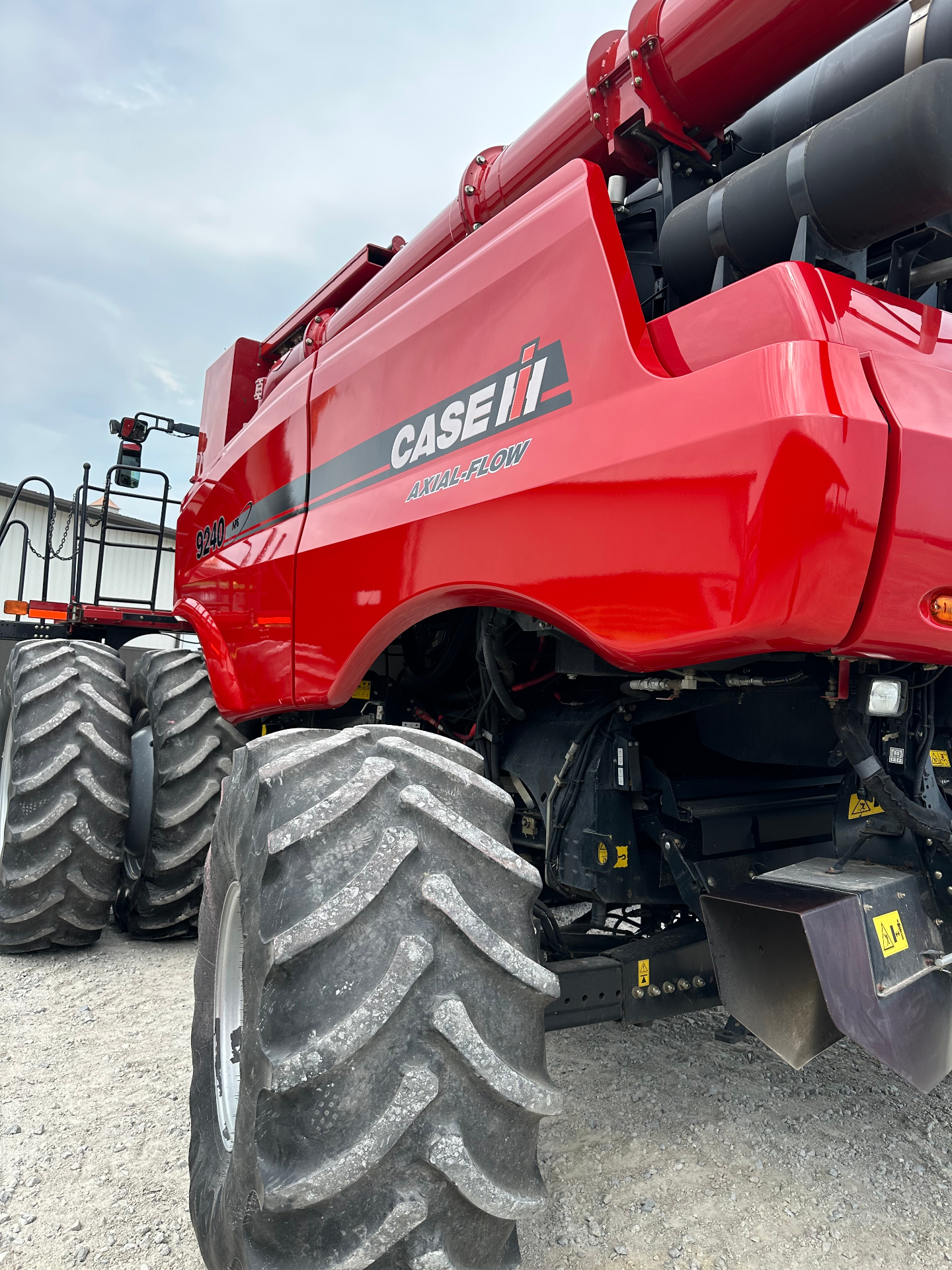
Ceramic-coated tractors hold up differently. Mud rinses off instead of caking. Dust doesn't bond as aggressively. Chemical splashes wipe away before they can etch. Gloss stays in place season after season. For combines, sprayers, utility vehicles, and daily-use tractors, the maintenance time saved alone justifies the coating — and the paint protection is a bonus.
The Five-Year Comparison
Owner A waxes his tractor every couple of months for five years. He spends weekends applying wax, watching it wear off, and reapplying. By year five, the paint still shows fading and oxidation because wax can't keep up with UV and outdoor storage. Owner B installs a professional ceramic coating once. For five years he washes faster, deals with less contamination buildup, and maintains visibly better gloss. At trade-in, his tractor looks years newer. Same equipment, same climate — completely different outcome.
What About Cost?
Wax is cheaper at the register. That's the entire upfront advantage. Over the life of a tractor, the math shifts. Repeated wax purchases, the time to apply it, and the restoration costs from inadequate protection add up quickly. Faded paint reduces trade-in value by thousands. A ceramic coating costs more upfront but protects the paint long enough to preserve the equipment's appearance — and its resale value. The cheapest option rarely ends up being the least expensive.
Can You Put A Ceramic Coating Over Restored Paint?
Yes — and it's often the ideal sequence. If a tractor is already oxidized or faded, paint correction and restoration come first. Once the surface is restored, a ceramic coating locks in that result and prevents the deterioration from coming back. Coating faded paint without restoration just preserves the faded look. Restored first, coated second, maintained going forward — that's the formula. See Can Faded Tractor Paint Be Restored? for the restoration side of the equation.
Who Should Choose Wax?
Wax still has a place. Show tractors that live indoors. Equipment that's only used occasionally and stored under cover. Owners who genuinely enjoy detailing and want a quick weekend project. For those scenarios, wax provides a perfectly reasonable level of protection. We say that honestly — wax isn't useless; it's just outmatched on working agricultural equipment.
Who Should Choose A Ceramic Coating?
Ceramic coatings make the most sense for equipment that lives outside, works hard, and needs to hold its appearance for years: daily-use tractors, combines, sprayers, grain carts, utility vehicles, and any equipment an owner plans to trade or sell down the line. If the goal is long-term protection with the least ongoing effort, coatings are the answer.
Why Farmers Are Switching To Ceramic Coatings
Across northern Missouri, more equipment owners are moving from wax to ceramic coatings — and the reasons are practical. Less time washing. Less time reapplying protection. Better-looking equipment in the yard. Higher trade-in values at the dealer. Real protection against the climate. Once farmers see a coated tractor wash up after a long day in the field, the comparison sells itself.
How ROAR Ceramic Coatings Help
ROAR Ceramic Coatings are engineered specifically for agricultural and heavy equipment. Benefits include: ✓ Strong UV protection ✓ Easier cleaning and washing ✓ Reduced oxidation ✓ Long-lasting hydrophobic water behavior ✓ Multi-year durability ✓ Improved gloss and appearance ✓ Easier ongoing maintenance. ROAR was built for the conditions tractors actually face — outdoor storage, chemical exposure, dust, mud, and Missouri weather — not detailing-bay scenarios.
Why Pro Ag Polishing?
Based in Gallatin, Missouri, Pro Ag Polishing helps farmers throughout northern Missouri restore and protect tractors, combines, sprayers, utility vehicles, and agricultural equipment. Owner Case Chrisman became a certified ROAR Ceramic Coating installer while still in high school through his FFA SAE project, and continues helping equipment owners protect the appearance and value of their investments.
Get A Free Equipment Assessment
Not sure whether wax or ceramic coating makes the most sense for your equipment? Send photos. We'll review your equipment and provide honest recommendations based on your goals, usage, and storage conditions. No pressure. No obligation.